Florida Restaurant Health Scores & Inspection Reports: What Diners Should Know
TL;DR
Checking Florida restaurant health scores, especially for high priority violations, is important. Knowing what to look for is key. In Florida, restaurants are not required to physically post their health inspection scores on site for diners to see. This makes it harder to determine if the establishment is safe (and clean) enough to consume their food without further investigation. Florida’s Department of Business and Professional Regulation is against posting scores physically on site, claiming they are simply a “snapshot” and do not accurately reflect the current state of the restaurant. We don’t necessarily agree, and think Florida restaurant violations should be physically visible, and there are stats behind our reasoning.
In this article
For foodies, going out and trying new restaurants is a rite of passage. In culinary hotspots like New York and Los Angeles, restaurants are required to post their health scores directly at the front of the restaurant so patrons can see the grade before deciding if they want to dine there.
In Florida, restaurant inspections are still conducted regularly, but Florida restaurant health scores are not required to be publicly posted for customers to see. The state conducts health and safety regulation checks throughout the year, yet diners often have no immediate way of knowing how a restaurant performed during its most recent inspection.
This can create potential health risks when dining at establishments that may not take cleanliness as seriously as you’d expect, considering they’re preparing your food. Fortunately, there are multiple ways Floridians can check Florida restaurant health scores and inspection reports online through the Florida Department of Business and Professional Regulation (DBPR). These reports show the requirements met, missed, and what the restaurant was penalized for. Dining out should always feel safe, and knowing how to check inspection reports is one simple way to protect yourself.
Why Restaurant Inspection Reports Matter
Food safety inspections exist to reduce the risk of foodborne illness. Violations can indicate issues with food handling, storage, sanitation, or pest control. Checking inspection reports before dining somewhere new can give you a clearer picture of how seriously a restaurant takes food safety.
Why Florida Doesn’t Publicly Post Restaurant Health Scores On Site
Florida’s lack of a public letter grade system is a deliberate policy choice by the Department of Business and Professional Regulation (DBPR). It is heavily supported by industry groups like the Florida Restaurant & Lodging Association, with the primary argument that a single letter is a “snapshot” that fails to tell the whole story.
Top 3 Reasons Florida Rejects Letter Grades
1. False Sense of Security
Officials argue a grade on a door could have been earned months ago and might not reflect current conditions, potentially misleading diners.
2. Rapidly Changing Conditions
A kitchen’s state can change drastically minutes after an inspector leaves. They believe that the single inspection does not fairly reflect how the restaurant is always operating.
3. Industry Pressure
Industry advocates claim grading is “not good for the industry or the consumer” because it’s too superficial. They argue Florida’s system, where severe issues lead to immediate closure, is stricter than systems where a restaurant can have pests but still display an “A”.
Why We Think Health Scores Should Be Required On Site at Florida Restaurants
While we understand the “reasons” mentioned above, we don’t necessarily agree with them. Our view is that restaurants should follow proper protocols whether they know an inspector is coming or not. We see no viable reason that is ‘superficial’ or ‘harmful’ to an establishment if they were following the rules in the first place.
Florida has more than 40,000 licensed food service establishments, all subject to routine inspections. Publicly posting scores encourages restaurants to maintain higher standards, as they know informed customers may avoid them after a poor report. The worst part is, a restaurant may look clean in the dining area but have “High Priority” violations in the kitchen (such as pest infestations or improper food temperatures) that are not visible to patrons.
Statistics Proving Public Posting is Beneficial to Patrons
Research from the CDC and other public health agencies indicates that grading systems are highly effective at reducing illness, which is a major point of contention for those favoring transparency. And, as someone who recently suffered severe food poisoning from an establishment with a “low score”, I couldn’t agree more. Patrons’ health should take priority over the ‘superficiality’ of a letter grade.
Communities that require restaurants to post their inspection results at the point of service (like in a window) saw 55% fewer foodborne illness outbreaks compared to those that only post results online. Not to mention, that agencies using letter grades (A, B, C) reported the lowest mean and median numbers of restaurant outbreaks per 1,000 establishments.
In New York City, 91% of adults approved of the grading program, and 88% considered the grades when making dining decisions. Another study found that mandatory grade posting in Los Angeles County significantly improved inspection scores and was associated with a decrease in hospitalizations for foodborne illnesses. So why wouldn’t Florida want to keep its residents as healthy as possible?
How Often Restaurants Are Inspected in Florida
All public food service establishments that are regulated by the DBPR are required to have between 1-4 unannounced inspections each year. The number of inspections is based on risk factors that include: type of food utilized, food preparation methods and inspection and compliance history. Each of these has proven to have a direct connection to the occurrence of foodborne illnesses.
Understanding Florida Restaurant Health Score Results
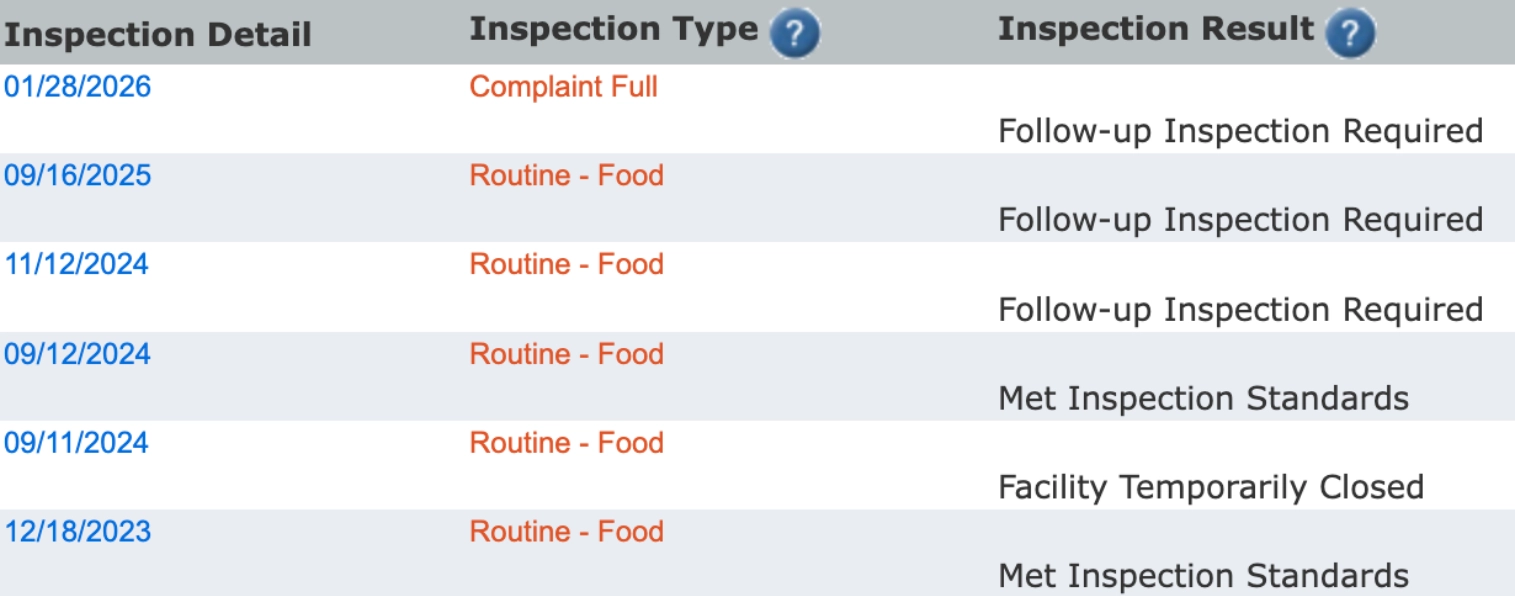
Restaurant inspections in Florida are conducted by the Florida Department of Business and Professional Regulation (DBPR). The DBPR monitors health and safety requirements in order to provide this ‘snapshot’ for food establishments all based on the severity of the violations, the risk to public health, and whether the infractions are new or repeat offenses. Florida inspection results fall into three main categories: Met inspection standards, Follow up inspection required, or Facility temporarily closed.
- Met Inspection Standard: No significant issues were found
- Follow Up Inspection Required: Violations must be corrected and verified
- Emergency Order/Temporary Closure: Serious health risks require immediate closure until corrected
How to Evaluate a Food Health Inspection Report (What Really Matters)
While the official state reports can be dense, there are several ways to get straight to the safety information you need. When reviewing a Florida restaurant inspection report, the most important things to look for are:
- Multiple high priority violations during a single inspection
- Repeat violations across multiple inspections
- Emergency closures or follow up inspections
- Patterns of recurring sanitation or pest issues
We know it’s easy to get overwhelmed by the long list of technical notes and violations when reading an inspection report. Understanding what inspectors prioritize can help you quickly determine whether a restaurant has serious food safety concerns or simply minor maintenance issues, since not every issue carries the same level of risk.
Florida Restaurant Inspection Violation Classifications
Florida health inspections typically categorize violations into three main levels based on their risk to public health: Basic, Intermediate and High Priority.
- High Priority Violations: those which could contribute directly to a foodborne illness or injury
- Intermediate Violations: those which, if not addressed, could lead to risk factors that contribute to foodborne illness or injury
- Basic Violations: those which are considered ‘best practices’ to implement
Inspectors consider the severity of a violation and if the infractions are new or repeat offenses. The most critical and harmful violations are marked high priority, meaning when you read the report, those are the main violations you want to look for.
What Are High Priority Violations in Florida Restaurant Inspections
High priority violations are the most serious issues identified during a restaurant inspection. These violations are considered likely to directly contribute to foodborne illness or injury if not corrected immediately. Examples of high priority violations seen in Florida inspection reports include:
- Improper food temperatures, such as cold foods stored above 41°F or hot foods below 135°F
- Cross-contamination, such as raw meat stored above ready to eat foods
- Employees failing to wash their hands when required or handling food with contaminated hands
- Rodent or cockroach activity, including live pests or significant droppings
- Toxic chemicals stored near food or food contact surfaces
- Improper reheating of previously cooked food
- Sewage backup or plumbing issues affecting food preparation areas
Because these violations pose an immediate health risk, they often require immediate correction during the inspection and may result in a temporary closure if the issue cannot be resolved quickly.
Intermediate Violations in Florida Restaurant Inspections
Intermediate violations are problems that could lead to food safety risks if they are not corrected. While they may not cause immediate illness, they indicate that proper food safety procedures are not being consistently followed. Examples include:
- Improper sanitization of utensils or food contact surfaces
- Lack of proper handwashing signage or supplies
- Inadequate employee food safety practices
- Food stored improperly or not clearly labeled
Repeated intermediate violations can signal poor training, weak management oversight, or inconsistent food safety procedures.
Basic Violations in Florida Restaurant Inspections
Basic violations are generally considered lower risk and often relate to facility maintenance or general cleanliness rather than direct food contamination. Common examples include:
- Dust or grease buildup on equipment
- Dirty floors or walls in kitchen areas
- Missing light shields over food preparation areas
- Minor maintenance issues in the kitchen or storage areas
While these violations typically do not cause foodborne illness on their own, they can still reflect how well a restaurant maintains its kitchen environment.
As we mentioned above, multiple high priority violations are likely to result in a temporary closure of the facility. This provides the restaurant time to fix the issue(s), and prevents the public from potentially getting sick. To see a full list of violations, you can visit the hotels and restaurant inspection page or for more details, this PDF provided by Florida DBPR.
Tips for Evaluating Florida Inspection Reports
Because Florida does not assign simple letter grades like some other states, reviewing the context and severity of violations is the best way to understand a restaurant’s true safety record. A single minor violation may not be concerning, but repeated high priority violations could indicate ongoing food safety problems.
- Read the Inspector’s Comments: Don’t just look at the violation type. Since Florida uses a “snapshot” system rather than a fixed grade, the context of these violations is as important as the violations themselves. The comments provide the necessary scale of the problem. (“Observed 30 live roaches” vs. “Observed 1 dead roach”)
- Ignore the fluff: It’s hard to get a perfect score, so pay attention if all of the violations were “Basic”. Things like a dusty ceiling fan or a missing light shield may indicate general upkeep, they rarely cause food poisoning on their own.
- Pay attention if the result is either “Follow up Inspection Required” or “Emergency Order” (temporary closure) since closures typically indicate serious violations. But, be sure to look at the notes for more details, as we’ve seen restaurants with recurring violations over several months, which can indicate a lack of consistent management, not necessarily cleanliness.
Where to Check Florida Restaurant Health Inspection Reports
Since Florida restaurant health scores aren’t posted on site at the restaurant, you must find them through different official channels. The main places to check Florida restaurant health inspection scores are:
- Florida Department of Business & Professional Regulation (website or mobile app)
- Yelp restaurant listings (website or mobile app)
- LifeKitchen (mobile app)
Navigating the official DBPR website can be tricky. If you prefer visual step by step instructions for checking Florida restaurant health scores, we’ve got you covered. We provide detailed, step by step instructions for how to check restaurant inspection reports in Florida through DBPR, Yelp and LifeKitchen so you can actually find the restaurant health scores quick and easy. We also cover the current inspections that resulted with emergency closures in more detail.
Final Thoughts on Florida Restaurant Health Scores
Florida restaurant health scores may not be posted on restaurant doors, but they are available if you know where to look. Taking a few minutes to check inspection reports can help you make more informed dining decisions and avoid potential food safety issues.
Frequently Asked Questions About Florida Restaurant Health Scores
What happens if a restaurant fails a health inspection?
If a restaurant fails a Florida restaurant food inspection, the inspector may require immediate corrections, schedule a follow up inspection, or temporarily close the establishment if serious health risks are found. Violations are documented in Florida restaurant inspection reports, which are public records available through the state Florida Department of Business and Professional Regulation (DBPR) database.
Do restaurants know when a health inspector is coming?
Most Florida restaurant inspections are unannounced. Inspectors typically arrive without warning so they can observe normal food handling and sanitation practices. However, follow up inspections or complaint investigations may occur within a general timeframe after a previous inspection.
How can you look up restaurant health inspections in Florida?
To find Florida restaurant health scores and inspection reports, search the Florida DBPR Division of Hotels and Restaurants inspection database. You can enter a restaurant name, city, or county to view inspection history, violations, and compliance status. Third party apps like Yelp and LifeKitchen may also display summarized inspection data.
Do restaurants in Florida have to post their health scores?
No. Florida law does not require restaurants to display their health inspection scores or grades at the entrance or inside the restaurant. Inspection results are still public records, but diners must look them up online through the state’s restaurant inspection database.
Can you tell if a restaurant passed inspection just by visiting?
Usually no. Because Florida does not require posting restaurant health scores, you typically cannot tell if a restaurant passed inspection just by visiting. To verify results or review Florida restaurant health violations, you must check the official inspection report online or through a third party app.
How many violations does a Florida restaurant need to fail a health inspection?
There is no specific number of restaurant health violations that automatically causes a failure in Florida. Inspectors evaluate the severity of the violations and whether they are new or repeat offenses. Even one serious high priority violation, such as food contamination or unsafe food temperatures, can lead to a failed inspection or temporary closure.
How often are restaurants inspected in Florida?
Most restaurants in Florida are inspected at least twice per year. However, the exact inspection frequency can vary depending on the type of establishment, previous violations, and risk level determined by the Florida Department of Business and Professional Regulation.
Looking for the Best Food in Florida? Check Out Our Favorites!
The Ultimate Food Map for Florida Foodies
Discover our favorite spots, and the best South Florida restaurant recommendations.